Self-hosted LLM
Generative AI vs. Large Language Models: What’s the Difference?
Terms like generative AI and large language models are heard everywhere today. Sometimes, people use them interchangeably, though they are not the same. Almost every company thinks about using AI, but if you don’t know the difference between LLM and generative AI, you waste time and resources implementing the wrong tool.
From theory to production: understanding the difference between generative AI and LLMs is step one. The next question is how you actually ship these capabilities inside your product. Ethora’s AI SDK covers both approaches — you can wire in cloud LLMs (OpenAI, Anthropic, Google) or deploy a self-hosted LLM for compliance-first verticals like healthcare and finance. With that framing, here’s the primer.
Defining the Relationship
At its core, generative AI is a broad umbrella for artificial intelligence that whips up entirely new stuff – text, images, video, or even audio, drawing from massive datasets it was trained on.
LLMs fit right under that generative AI category. Every LLM is generative by nature since it produces text, but generative AI stretches way beyond just words. For instance, tools that generate visuals or sounds might not rely on an LLM at all. This distinction matters because, as we enter 2026, the lines are blurring with multimodal capabilities. Still, the foundation remains: LLMs power a lot of the smart AI chat and AI assistant concepts we see in everyday tools.
Practical Business Applications
AI saves time, cuts costs, and reduces mistakes. This makes many businesses explore the strategic use of it. Generative AI funding rose to $33.9 billion in 2025 (8x since 2022), and 93% of organizations use AI in some form.
No wonder, as it’s kind of the next level of automation. For example, if you’re a content creator, you can get hundreds of ideas in seconds or even ready-to-use content. If you’re a data analyst, you can just upload a file, and an LLM will spot trends, while generative AI might even create custom charts or reports tailored to your needs.
If you integrate an AI-powered chatbot into your customer service, human agents will be able to focus on more complex tasks than routine requests. LLM-powered chatbots understand the context, which enables them to provide customers with more accurate and relevant answers. Additionally, their answers don’t feel robotic, which builds trust.
In e-commerce, such bots can help users choose alternative products or guide them through checkout. In travel apps, they can compare prices or suggest alternative dates for a trip. There are many possible examples, but let’s move on.
Designing the Chat Experience
UI/UX design is a crucial part of any application, and when it comes to AI chat apps, it’s make-or-break. Clunky designs can kill even the smartest features, making it crucial to create an intuitive interface.
Consider building a design able to handle multimodal inputs (e.g., voice and images), many modern LLMs support these features out of the box. This makes interactions feel more natural and makes interfaces smarter. Additionally, this way, communication will have all the same features as other messengers your users use every day.
Development and Integration
Moving from idea to live application involves working on the details. For example, developers might want to know how they can add messaging to their React Native application, perhaps using this data to make it more efficient based on past chat logs. A code sample using React.js can provide insight into implementing live updates without needing to reinvent the wheel.
Implementing chat into a React.js application is not as difficult as it seems, thanks to available libraries. The evolving nature of LLMs means there is more work to integrate them, particularly regarding larger contexts and data types. For example, the number of parameters in top LLMs has increased exponentially; it is estimated that Claude’s current model has around 5 trillion parameters, focusing on efficiency via a mixture of experts architectures.
Scaling for Success: Build Professional AI Apps with Ethora
While basic chatbots provide a starting point, professional enterprise applications in 2026 require robust infrastructure. Ethora offers a comprehensive mobile chat SDK that allows businesses to bridge their data with the world’s most powerful LLMs.
Ethora’s solution works for various use cases. If you need to move fast and quickly set up a chat, you can use a low-code or no-code option. If you need full customization, or consider forking, extending, or auditing the code yourself, check out our optionally open-source GitHub framework.
Teams working in highly-regulated industries, such as finance or healthcare, and whose top priority is data ownership and compliance, can run their own chat server on AWS (or on-prem). Additionally, Ethora is FINRA- and HIPAA-ready.
In short, wherever you’re embedding AI-driven chat into a customer portal, building a secure internal collaboration tool, or launching a full messaging experience tied to your data and LLMs, Ethora provides the infrastructure to do it confidently and at scale. Explore the AI SDK, the self-hosted LLM agent, the chat SDK, or start building for free.

Share with your community


More Articles
Development
Oct 5, 2026
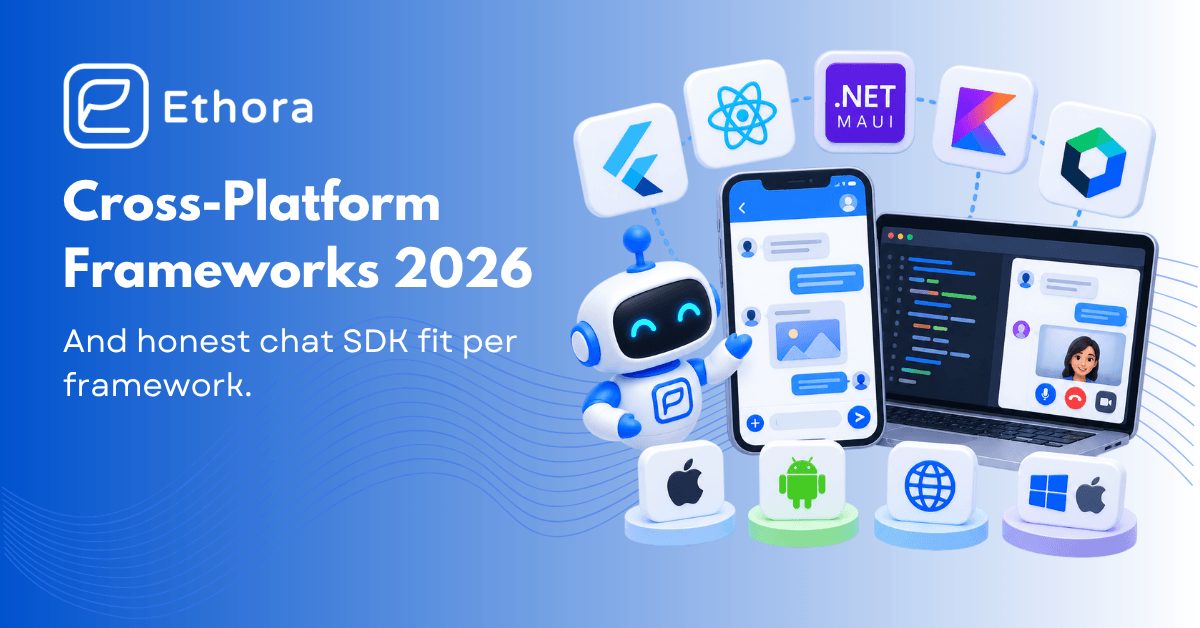
Cross-Platform App Development Frameworks in 2026: 10 Options Compared, Real Trade-offs, and Chat + AI SDK Fit
In 2026, evaluating cross-platform frameworks is a complex matter. There are many practical questions: Which ones have solid chat and AI SDK support today? Which ones won’t force a painful migration when the next major OS version drops? And what are the real engineering trade-offs once you move past the marketing claims? We’ll look at […]

Healthcare
Oct 1, 2026
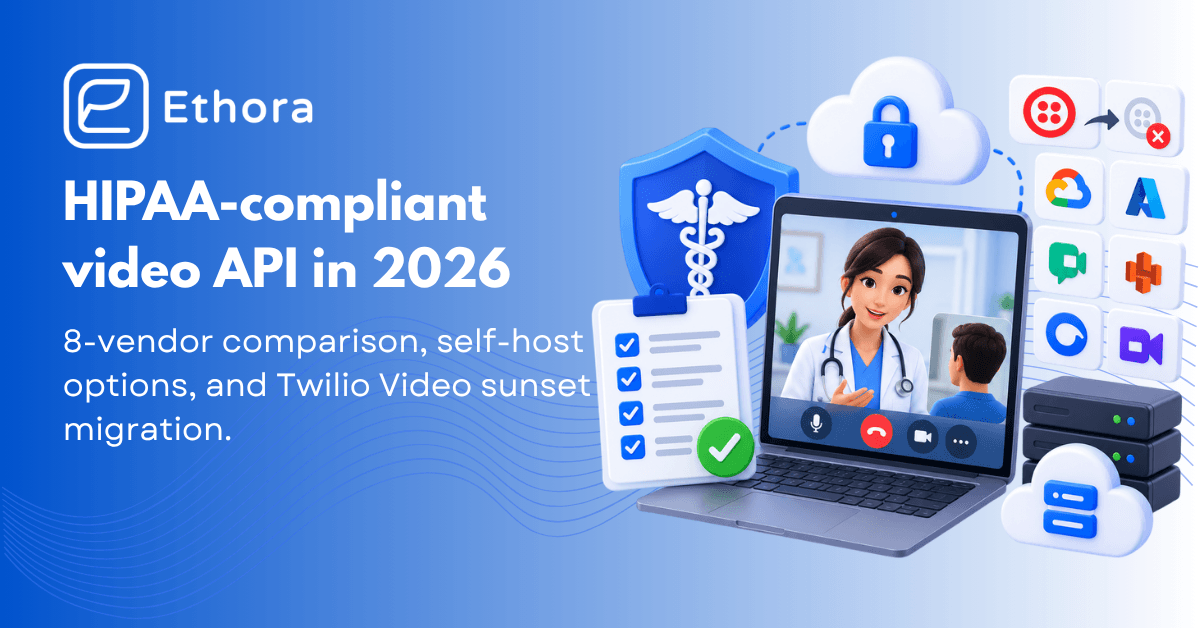
HIPAA-Compliant Video API in 2026: What Actually Makes One, Vendor Comparison, and Twilio Video Migration
Consultations, psychiatry meetings, medication management, triage, and other medical encounters often do not require physical presence. Adding video to your healthcare app or platform can be a great idea, as it allows you to hold sessions online without losing the human touch. Using a messaging API to incorporate video into your application makes the whole […]
Try Out Ethora in Action
Experience Ethora's messaging with a dedicated demo from our CEO or start building your App right now!