Glossary
Data Residency
Data residency is the requirement that data be stored and processed only within a specific country or geographic region, typically to satisfy a legal, regulatory or contractual obligation.
General definition
Data residency refers to the physical or legal jurisdiction in which data is stored and where processing operations take place. Regulations in many countries require that certain categories of data, such as personal data, health records or financial information, never leave a defined geographic boundary.
- The EU’s GDPR restricts transfers of personal data outside the European Economic Area unless adequate protections are in place
- US HIPAA does not mandate a specific geographic location but effectively requires that covered entities know exactly where patient data is held
- Countries including Russia, China, India and Brazil have data-localisation laws that require local copies of certain data
- Financial regulators in many jurisdictions require transaction data to be accessible to local authorities on demand
In practice, meeting a data-residency requirement usually means choosing a vendor that can guarantee your data is stored in a specific cloud region, or moving to an on-premise or dedicated server deployment where you control the physical location. It is related to but distinct from data sovereignty, which refers to the legal framework governing data rather than its physical location.
In the Ethora ecosystem
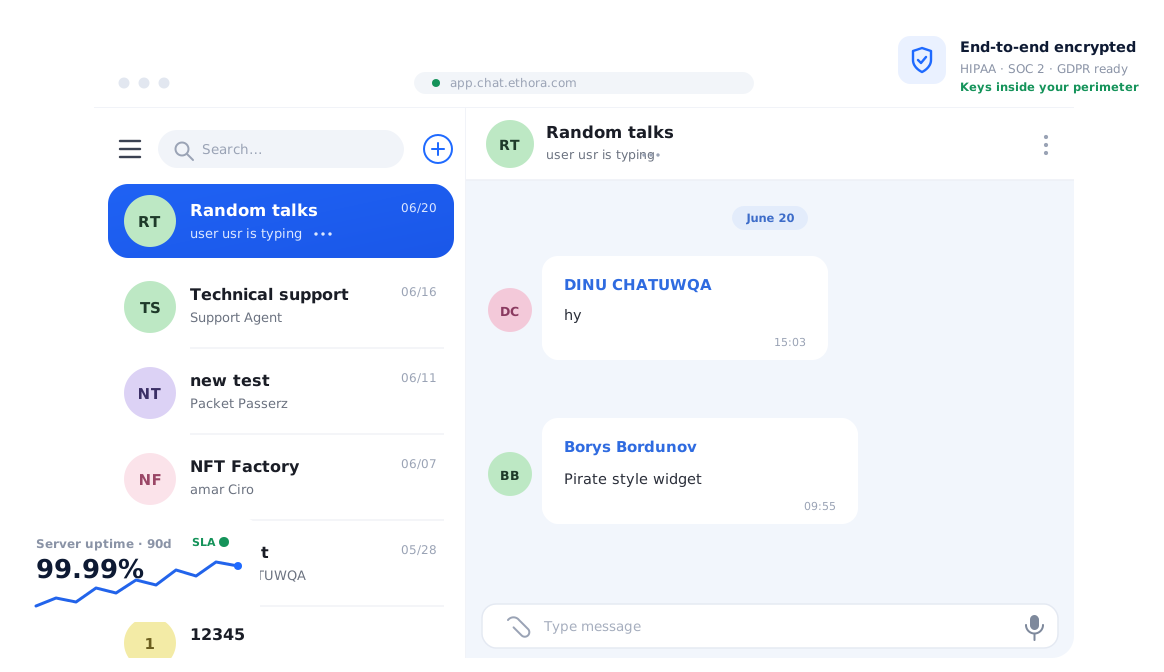
Ethora addresses data-residency requirements through its self-hosted chat server option. When you deploy Ethora on your own infrastructure, in your own AWS region, private cloud or on-premises data centre, every message, file and user record stays within the environment you specify. There is no routing through Ethora’s shared infrastructure.
This is particularly important for customers in the EU, healthcare sectors and heavily regulated markets. The audit log and multi-tenancy controls work alongside residency guarantees to give compliance teams a complete picture of where data lives and who has accessed it.