Today, we encounter chatbots on many web pages. Usually, they ask us what we’re looking for and how they can help. This seemingly small tool is crucial in user interactions with a company or brand.
If well-designed, it can drive business success and increase customer retention. Conversely, a poor UI can lead to frustration, confusion, and, ultimately, user abandonment.
In this blog, we’ll explore how to ensure the best user interface design for your chatbot and the best UI design tools.
What is Chatbot UI and Why Does It Matter?
So, what is UI at its core?
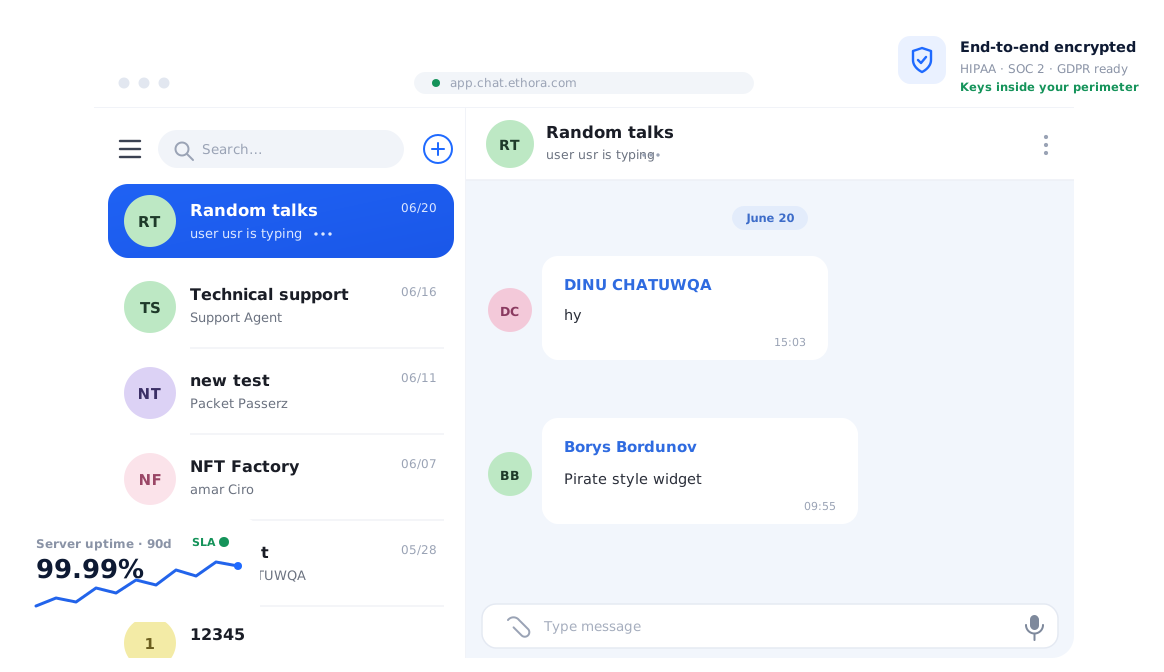
UI or user interface is a visual part of a chatbot that users interact with. It includes:
- Avatar
- Name
- Read receipts
- Buttons
- Menus
- Emojis
- File attachments
- How it displays messages
- etc
Any element that we see and use is UI. Its main purpose is to craft an intuitive and engaging conversation, making it feel natural and helpful, which, in turn, helps foster a stronger emotional connection and increase customer loyalty.
Key Principles of Chatbot UI Design
Effective chatbot UI design adheres to several core principles that ensure a positive and productive user experience:
- Simplicity. To avoid clutter and present information in easily digestible chunks.
- Clarity. Ensures that messages are unambiguous and user actions are self-evident.
- Consistency. This makes a bot reliable and usable.
- Responsiveness. Guarantees the chatbot adapts seamlessly across various devices and screen sizes.
- Personalization. It makes the experience more relevant and human, fostering understanding and building trust.
- Feedback. Elements like typing indicators and read receipts make conversation more interactive and engaging.
These user interface design principles will help you reduce friction and build trust. But some of them require a closer look to be used effectively.
Consistency
Consistency in chatbot UI design includes consistent use of colors, fonts, messaging style, button placement, and interactive behaviors across all touchpoints.
Predictable interface reduces cognitive load, making the interaction feel more natural and effortless. Additionally, it reinforces brand identity. Inconsistent design, on the other hand, leads to confusion and frustration, preventing user confidence.
Personalized Interaction
Personalization means adjusting responses, suggestions, and even the tone of the conversation based on previous interactions, stated preferences, or user-specific data. For instance, an e-commerce chatbot can offer relevant products based on previous purchases, or an investment app can suggest investment opportunities based on your preferences and risk profile. This is important because the vast majority of users (71%) expect personalization from the businesses they choose.
Feedback
Feedback mechanisms reduce uncertainty, improve engagement, and make interactions feel more human-like. For example, some chatbots use typing animations to signal that a response is being written or display confirmation messages after user actions.
Key User Interface Elements in Chatbot UIs
A successful chatbot interface isn’t just about functionality, but about a smooth, intuitive experience that feels natural to the user. These key user interface elements will help you guide users through the conversation and ensure engagement.
- Chat window. This is where the conversation takes place. It sets the stage for all interactions, so it should be clean, readable, and responsive.
- Message bubbles. These visually separate user and bot responses. Use different colors, alignments, or styles to indicate who is “speaking.”
- Quick replies and buttons. Predefined response options streamline interactions by reducing typing and guiding users down a clear path.
- Input field. Make sure that the area where users type messages is easy to find. Also, add a placeholder text or icons to prompt interaction.
- Typing indicators. Small animations (like dots or a quill) to show the bot is generating a response. This helps manage user expectations and adds a human-like touch.
- Timestamps and avatars. Both of these elements add context and personality. Thus, users know when a message was sent, while avatars make a bot more human-like.
- Message history. This will help users to check the information when needed. Ensure smooth scrolling and message loading to improve overall usability.
Using these elements thoughtfully will help you not only build a more natural experience but also build trust with customers.
How Graphic User Interfaces (GUIs) Play a Role in Chatbot UI
A graphic user interface (GUI) is a type of UI that enables users to interact with a chat using visual elements. These elements include icons, buttons, menus, windows, images, and even animated responses. They allow users to visually process information and click on clear call-to-action buttons. This contributes to a dynamic conversational flow, enhances comprehension, and even speeds up decision-making.
Visual Cues in Chatbot UIs
Visual cues such as structured messages with actionable buttons, dropdown menus, or rich media are a part of GUIs. They are widely employed in chatbots (e.g., Facebook Messenger Bots, Slack) to guide users effectively and streamline workflows. Visual cues minimize typing, add clarity, and make the overall conversation more user-friendly.
Chatbot UI Design Tools
In this section, we’ll explore the top user interface design programs that can help you ensure the best conversational experiences.
Top Design Tools for Chatbot UIs
Several UI design tools proved to be particularly well-suited for creating chatbot UI. With features such as prototyping, collaboration, and component libraries, they quickly became a favourite among designers.
Figma
A versatile, cloud-based tool. Figma allows teams to collaborate in real-time, create interactive prototypes, and design responsive chatbots that adapt to any screen, whether it’s web or mobile. Figma’s plugin ecosystem supports elements as conversation flows and message bubbles, making it well-suited specifically for designing chatbots.
Sketch
A go-to tool for designers who work on macOS. Sketch has robust vector editing capabilities and allows for simulating chatbot interactions for user testing. Additionally, it offers reusable components, which simplify the creation of consistent elements (chat windows, input fields, buttons, etc).
InVision
This user interface design program enables designers to transform static chatbot UI screens into interactive, clickable prototypes. It allows simulation user interactions, linking screens, and test flows, and gathering feedback early in the design process. InVision’s advanced collaboration features (commenting, version history, and so on) enable teams to iterate quickly and ensure the functionality of the bot.
Marvel
Marvel simplifies the process of creating interactive chatbot UI prototypes. It turns static chatbot screens into clickable flows, simulating user interactions like button taps, message replies, or navigation between chat states. Its usability testing and handoff features make it easy to gather feedback and share designs with developers.
Best Practices for Creating an Effective Chatbot UI
To create the best user interface design for chatbots, you need a balance of aesthetics, functionality, and user-centric principles. Follow these best practices to achieve it:
- Understand the user’s needs. Your goal is to help the user. Their pain points should be your focus. Design a chatbot to meet user expectations and offer relevant solutions without effort.
- Keep the conversational flow. Ensure the conversation seems natural, not robot-like. Well-structured flow guides users through predefined paths or provides clear options, making the experience predictable and efficient.
- Prioritize user experience. Intuitive design enhances user experience, makes the bot more accessible for diverse users, and increases conversation efficiency. Also, make sure it’s responsive across various devices.
- Make it personalized. Life-like conversations are more engaging, they make users feel valued and understood. This also drives engagement and satisfaction.
- Add personality to the chatbot. This will help you build a better connection with the customers. It may be any character that represents your brand – a doctor, a manager, a professor, or even something funny.
Adherence to these practices will help you build a chatbot that will look good and be helpful. This will ultimately lead to a top-notch user experience.
Designing Chatbot UIs for Websites
Chatbots on websites are used to guide users, assist them, and provide recommendations without disrupting the customer journey. If they work effectively, they improve satisfaction and decrease bounce rates. To achieve this, ensure chatbot UI aligns with the website’s user interface design and appears contextually relevant (e.g., popping up during checkout or on a product page).
Developing Chatbot UIs: A Comprehensive Approach
Developing user interfaces for chatbots involves three main stages:
- Planning – defining user needs and mapping conversation flows
- Prototyping – designing mockups, building prototypes, and testing functionality
- Iteration – testing chatbot UI, improving it, and repeating the cycle
This process requires your dev and design teams to collaborate. Effective collaboration between departments requires the following:
- Regular communication (use instruments like Slack or other corporate messengers)
- Sharing feedback (to ensure the design is convenient for different users)
- Track progress (to stay on schedule, identify problems early, maintain team alignment, and make informed choices about resources, timelines, and priorities)
Following this advice will help your teams build the best chatbot UI, where all user interface design elements (like chat bubbles or buttons) are technically feasible and optimized for performance.
Interface Programming in Chatbot Development
User interface programming enables interactive elements like real-time responses, animations, and data integration. It helps create dynamic and functional chatbot UIs. Coding languages and frameworks such as JavaScript or Python help bring designs to life. They help ensure that chatbot UIs are responsive, scalable, and capable of handling diverse user interactions.
JS handles real-time message updates, button interactions, and animations, and integrates with APIs to deliver smooth user experiences. To create modular, responsive chatbot components, developers often use frameworks built on JavaScript (React or Vue.js).
Python is used on the backend to create chatbot logic, handle data, and integrate natural language processing (NLP). To enable real-time conversations, user data tracking, and smart responses, you need to connect Python to the frontend, using libraries such as Flask or Django.
Tips for Success
Creating the best chatbot UI is an ongoing process, not a one-time effort. It starts not with the development or design, but with understanding the customer’s needs. Here are some tips that will help you succeed:
- Prioritize UX. Keep interactions simple, provide clear navigation (buttons or quick replies), and maintain consistent visual elements throughout the chat flow.
- Ensure accessibility. The chatbot should be readable, mobile-friendly, and support users with different needs.
- Leverage microinteractions. Employ typing indicators or subtle animations for a smoother and more human experience.
- Test early and often. This will help you uncover friction points, detect bugs, and ensure the chatbot remains aligned with user needs.
These recommendations will help you craft an effective chatbot UI design. But if you’d like to make the process easier, Ethora is here to help. Our chat SDK is designed to build, customize, and scale conversational interfaces across platforms. Additionally, you may want to peek into our related AI SDK features such as:
- Embeddable AI Chat Bot widget (for seamless LLM-powered AI Chat bot integration via HTML code or WordPress plugin), and
- AI Chat Agent builder (for your Ethora-powered mobile or web apps)
Whether you’re building a startup or need an enterprise-ready solution to serve thousands of users, we’ll help you deliver the best possible user experience.
Contact us to learn how Ethora’s SDK can power your next chat bot project.
Keep Reading
- Why your website’s AI chatbot is probably useless (and how to fix it)
- Ethora AI Widget — lightweight, scalable, powered by ChatGPT
- Why RAG is critical for customer support AI
Ship a polished chatbot UI fast — explore the React chat UI kits and agent chatbot builder, or start building for free.

Share with your community


More Articles
Development
Oct 5, 2026
Cross-Platform App Development Frameworks in 2026: 10 Options Compared, Real Trade-offs, and Chat + AI SDK Fit
In 2026, evaluating cross-platform frameworks is a complex matter. There are many practical questions: Which ones have solid chat and AI SDK support today? Which ones won’t force a painful migration when the next major OS version drops? And what are the real engineering trade-offs once you move past the marketing claims? We’ll look at […]

Healthcare
Oct 1, 2026
HIPAA-Compliant Video API in 2026: What Actually Makes One, Vendor Comparison, and Twilio Video Migration
Consultations, psychiatry meetings, medication management, triage, and other medical encounters often do not require physical presence. Adding video to your healthcare app or platform can be a great idea, as it allows you to hold sessions online without losing the human touch. Using a messaging API to incorporate video into your application makes the whole […]

Try Out Ethora in Action
Experience Ethora's messaging with a dedicated demo from our CEO or start building your App right now!