Development
The Ultimate List of 16 Best Open-Source Software in 2026

If you’re a developer, you’ve likely used proprietary software and know what it means to spend a lot of time wrestling with its clunkiness that locks you in and drains your budget. So, you know how it feels when you need more flexibility and freedom over customization.
Open-source software is a great alternative to proprietary solutions. They are smart, flexible, and secure defaults for anyone serious about building scalable apps. In this blog, we’ve pulled together a list to give you real options that actually deliver.
Let’s dive in.
The Open-Source Advantage in 2026
Here’s the thing: open-source code is available for anyone to inspect, modify, and improve. No black boxes. No vendor lock-in. That transparency is why security experts keep calling it the gold standard. When thousands of eyes are on the same codebase, it’s much easier to detect and find bugs than when working in a closed team. Everybody contributes to the improvements, so it doesn’t require huge in-house spending.
According to research, 57% of organizations use it specifically to lower overall IT spend, 55% to boost team efficiency, and 54% to modernize their infrastructure. Additionally, you get communities that actually care. Self-hosted communication backends? Check. Custom features without begging a sales rep? Double check. In a world full of remote teams and rising cyber threats, community-driven security and flexibility are what make open-source so popular.
Top 16 Open-Source Tools for Business & Development
We focused on tools that teams are using in 2026 – from communication and productivity to infrastructure and AI. Each offers faster updates and the freedom to customize the solution to your needs.
Jitsi Meet
Fully encrypted video conferencing that plays nice with other tools. Open-source means you can run it on your own servers and integrate it seamlessly – no more app fatigue from switching platforms.
Cal.com
It’s a scheduling infrastructure. An open-source alternative to proprietary tools like Calendly. It is widely used by companies needing a robust, API-first approach to meeting management.
SuiteCRM
A complete CRM alternative that handles sales, service, and marketing. The open code lets you customize workflows without extra licensing fees.
LibreOffice
Office suite: Writer for docs, Calc for spreadsheets, Impress for presentations, Draw for diagrams, and Base for databases – with Microsoft Office compatibility and zero subscriptions or tracking.
GIMP
A free alternative to Photoshop. GIMP is an image editor used for photo editing, retouching, and graphic design. Thanks to its open nature, it offers users a massive plugin ecosystem.
Shotcut
A lightweight, cross-platform video editor. It allows editing videos directly on the timeline without converting files and supports hundreds of formats. Perfect for beginners, amateur-level editing, and those who work on quick social media clips or simple YouTube videos.
WordPress
One of the most popular and powerful CMS in the world for blogs, e-commerce, and custom portals. It powers over 60 million sites, more than any other platform. It allows you to easily integrate third-party tools, extend functionality, or create fully custom solutions.
Tensor Flow
Google’s end-to-end open-source machine learning platform. Massive ecosystem for everything from mobile to servers to edge devices. Has 194k GitHub stars and constant updates. Huge for production-scale AI where stability and tools like TensorFlow Serving shine.
PyTorch
Dynamic, Pythonic, and GPU-accelerated out of the box. Dominant framework in deep learning research (70%+). The open-source codebase enables researchers to prototype quickly and iterate without fighting the framework.
Prometheus
The leading open-source monitoring and alerting toolkit for cloud-native environments. According to industry reports, it remains an “unbeatable” standard for scraping application-level metrics in 2026.
Grafana
The premier visualization platform for metrics, logs, and traces. It is almost always used in tandem with Prometheus to create real-time dashboards for system health.
Netdata
A real-time, full-stack observability platform that now includes built-in AI capabilities for anomaly detection. It is highly valued for its ability to provide per-second monitoring with zero configuration.
Docker
A leading containerization platform that enables you to deploy apps consistently across environments. The open-source engine behind modern self-hosted setups and cloud-native development.
Mozilla
Global open-source project that promotes community-driven development, innovation, and transparency. Their most famous project is the web browser Mozilla Firefox. Still, they have a vast portfolio of open-source projects, including Thunderbird (email client), Common Voice (database of voice recordings for training voice-recognition engines), and others.
Linux
Linux is an open-source operating system. It’s the primary backbone for modern cloud infrastructure, supercomputers, and mobile devices, which powers over 96% of the world’s top 1 million web servers.
Ethora
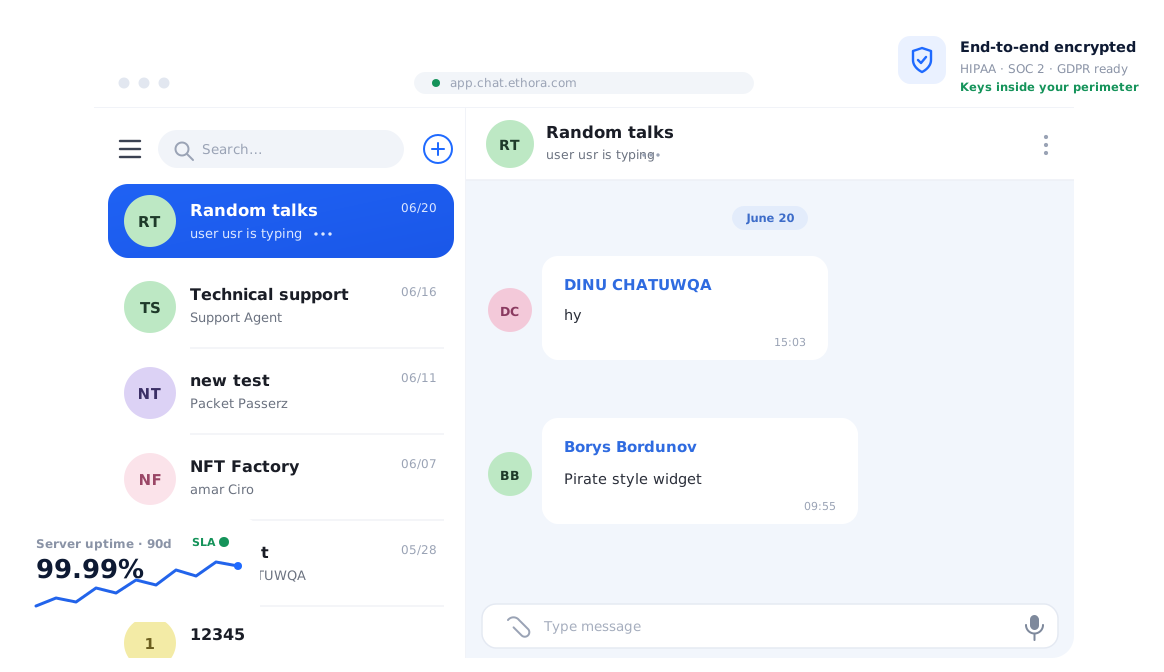
An open-source chat engine designed for fast deployment of secure, real-time messaging apps with community tools. It enables developers to build MVPs and full-scale applications, develop digital wallets, embed chats on legacy portals, integrate AI, and more.
Designing the Modern Chat Experience
User retention lives or dies on the interface. People expect smooth, natural conversations – voice messages, image sharing, and emojis that actually work. Good news is that you don’t have to code the whole UI from scratch.
Chat UI kits and templates help you effortlessly build a chat UI design that feels invisible. Everything’s ready to use – you just customize it and get a working solution for mobile and web. Developers who use pre-built chat UI kits or chat UI templates skip months of polish work and can fully focus on the business logic.
Integration and Deployment
Integrating and deploying messaging into your React Native or React.js app is quite straightforward. Here’s the technical guide on moving from a local environment to a scalable web or mobile platform:
- Pick a solid backend (for example, Ethora)
- Use a React chat component or JavaScript chat library to bridge the gap
- For React Native: follow “how to integrate messaging to my react native app” guides – usually just a few lines of SDK setup plus WebSocket handling
- For web: embed with a React.js messaging code sample or chat logs viewer that pulls from your backend
It turns raw backend logic into a polished, working interface in days instead of weeks. Self-hosted options keep your data under control, and scaling to mobile or web becomes straightforward.
Scaling for Success: Build Professional AI Apps with Ethora
Standalone open-source tools are great starting points – but when you need enterprise-grade reliability, AI smarts, and multi-platform reach, you want infrastructure that ties everything together.
Ethora’s modular Chat & AI SDK platform that gives you a full communication infrastructure plus ready-to-use SDKs. It cuts development time to days instead of months, as well as helps you save costs, because you don’t build everything from the ground up.
Here’s what you actually get:
- React Native chat SDK, web messaging SDK, chat SDK for iOS and Android – plus JavaScript chat library and NPM chat component for instant integration
- AI chatbot & agent SDK (Python and Node.js) with RAG-based crawler so your agents pull real business data
- Self-hosted chat server on AWS (or anywhere) using the AWS Node SDK – full control over your data
- Compliance-ready options like HIPAA-compliant live chat for healthcare or fintech messaging SDK for finance
- Niche tools for marketplaces, gaming apps, travel apps, and more
Whether you’re extending an open-source project or building something brand new, Ethora lets you ship professional, scalable AI-powered apps without the usual six-month slog. Check it out and see how quickly you can go from prototype to production.

Share with your community


More Articles
Healthcare
Aug 21, 2026
Is WhatsApp HIPAA Compliant? What Healthcare Teams Need to Know
You can use WhatsApp for general tasks like scheduling, sharing admin announcements, as long as no patient health data is shared.


Chat SDK
Aug 20, 2026
Chat vs Email for E-Commerce: When Each Wins, With Real Conversion Numbers
This article maps each channel to the lifecycle stage where it actually converts, puts real numbers behind the claims, and covers where SMS and WhatsApp fit into the picture

Try Out Ethora in Action
Experience Ethora's messaging with a dedicated demo from our CEO or start building your App right now!