Swipe left, swipe right – in just a few taps, people are meeting, matching, and sometimes even marrying. Dating apps are booming, and the dating app market is one of the most dynamic worldwide. And this is a great opportunity for developers. Creating your own dating app today is a good idea for several reasons:
- Growing trend. There’s a huge potential user base, as more people will be looking for digital solutions for finding partners
- Cultural shift. Online dating is becoming socially normalized and accepted across age groups and cultures
- Room for innovation. Many apps use superficial matching algorithms. Using artificial intelligence, you can offer better algorithms, deeper compatibility tools, and safer, more meaningful experiences
More than 50% of couples today meet online. Acquaintances through the internet are the new normal, as our lives move online entirely. So, if you’d like to create an app like Tinder or an application for specific communities, continue reading. In this blog, we’ll break down exactly how to do that.
What Is a Dating App and How Does It Work?
A dating app is a digital platform that connects individuals looking for romantic or social relationships. They analyze location, interests, preferences, and behavior patterns to find and suggest a potential match.
Dating apps focus on real-time engagement and convenience. Everything is simple and fast: short info and photo, and swipes to decide whether you’d like to start a conversation or not.
Types of Dating Apps and Market Overview
There are various dating app types, and knowing them will help you understand what innovations you could offer and how to stand out from the crowd.
- Traditional. Apps are similar to dating websites. You can see user profiles, read information, and decide if it’s the perfect match for you.
- Location-based. They analyze the location and then sort profiles to show you the most suitable profiles.
- Compatibility-based. When users register in compatibility-based apps, they answer questions about their hobbies, interests, lifestyle, ideal partner, etc. Then the dating app algorithm finds them the best match.
- Niche dating apps. Apps that target specific communities like LGBTQ+, seniors, ethnic groups, Christians, pet lovers, and so on. The focus on one group allows such apps to create a better user experience, as they often offer tailored design and features, as well as improved match quality.
Knowing the types of dating apps will help you identify market trends and where users’ needs aren’t met yet. Whether you’re building for a broad audience or a specific niche, understanding what’s already on the market will help you create your own dating app that resonates with users, increasing its chances for success.
Planning: How to Start a Dating App from Scratch
How to start a dating app? Start with planning. This is the key phase that can determine the success of your dating application. Your planning should include the following actions:
- Market research. Learn what apps are on the market and what they offer, analyze trends, user pain points, and what features made popular apps successful. Identify what they lack; you can improve personalization, create a better sense of safety, or even offer a better matching algorithm.
- Defining TA. Define who your target audience is and create a customer profile. This should be a detailed, realistic portrait, based on data and with relevant details (like spends two hours a day on social media or prefers chatting over calling). This will provide you with practical and focused insights that help you tailor features and messaging to the needs of your customers.
- Unique value proposition. Determine the specific value that will make your solution a preferable choice for your TA. This could be AI-based match scoring or video-first dating. By the way, 48% of Gen-Z users prefer to have a video chat before meeting, so keep this in mind if they are your TA.
- Monetization strategy. Consider revenue models for your app. This may be a premium subscription, in-app purchases, or an advertisement.
- Building MVP. Launch a minimum viable product with essential features to test your ideas and validate concepts before scaling.
These are essential first steps to build the dating app. When you know your competitors, target audience, UVP, and have a strategy, you can start building.
Architecture and Key Features: How to Build a Dating App
When building a dating app, you need to ensure data integrity and that your app can operate even when your user base dramatically grows. To ensure your Tinder-like app can handle even millions of users, focus on backend scalability.
Key features
Some features are fundamental for any dating application. This includes:
- Registration and authentication. Make it easy to sign up, enabling various methods like via email, phone number, or social media.
- Profile management. Enable users to add photos and necessary information (e.g., interests, preferences, etc.)
- Swipes. It’s a fast and intuitive feature that allows users to express interest or skip a potential match.
- Matching system. This feature connects users based on mutual likes or compatibility scores. Without it, compatibility will be low, and your app won’t likely have success.
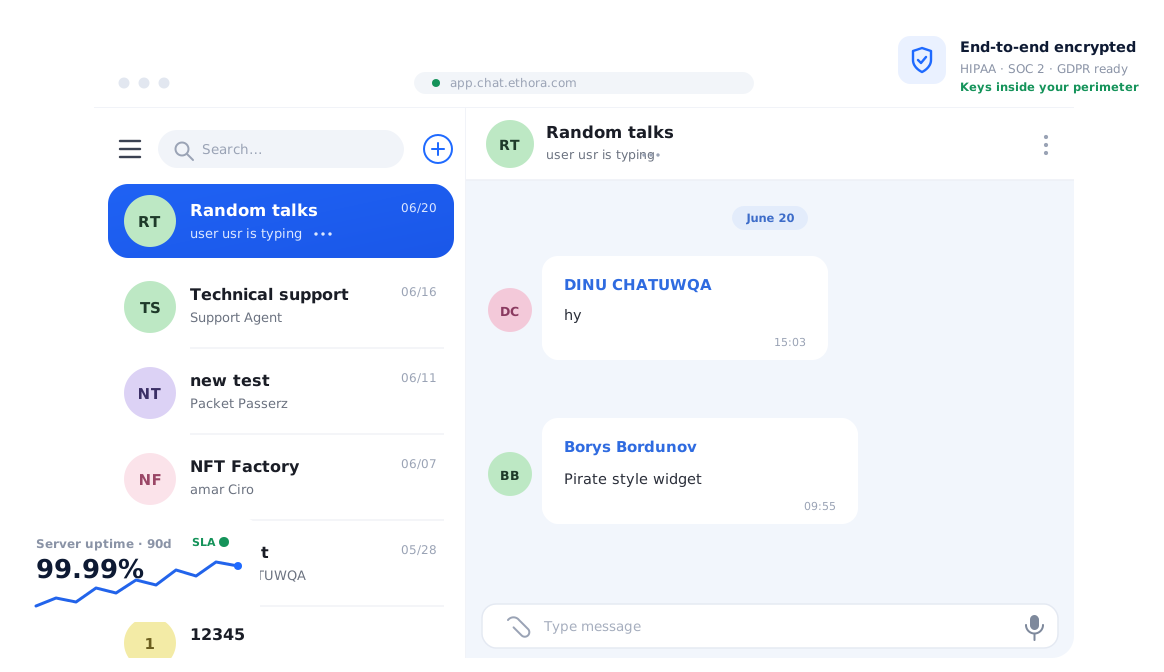
- Messaging. Real-time private conversations that increase engagement. You can make them even more engaging, enhancing this feature with media sharing and emojis.
- Notifications. Push notifications keep users active and informed about matches or messages. Also, they can increase engagement by up to 88%.
- Privacy and safety. Users should be able to block or report inappropriate activity or users they don’t want to engage with. Add block/report features, as well as identity verification and anti-spam measures, to improve UX.
These features are basic, but you can and should add other functionality, depending on your vision, target audience, and goals. This will help you build an app that users like, boosting engagement and retention.
Designing the User Experience and Interface
Sleek and intuitive dating app’s user interface creates a seamless experience that doesn’t require additional training. Statistics say that if onboarding is difficult, 74% of users prefer to switch to a competitor. This means the first time users open the app, they need to understand how to use it.
Here are a few design recommendations:
- Use colors and visuals. This will make your design more emotional and encourage trust and excitement.
- Microinteractions. Add subtle animations, haptic feedback, or sounds to make every swipe and match feel rewarding.
- Make the design inclusive. Ensure readable fonts, sufficient contrast, and easy tap targets to make the app accessible to everyone.
- Keep it simple. All navigation should be minimal and intuitive.
When creating a design, think about users. Make it comfortable for them: design should spark interest and not confusion, motivating users to explore the platform.
Implementing the Matching System and Algorithms
The matching algorithm is the heart of the dating app. This is the logic behind the match, the mechanism that determines which profiles to show one user and which to another. Basically, dating app matching algorithms rely on the following things:
- Demographics (age, gender, location)
- Preferences (what a user is looking for in a partner)
- Behavior (likes, response time, chat frequency, activity in the app)
But these are only basic, as today’s dating apps leverage AI and machine learning to make matching more effective. For example, it analyzes previous likes to suggest profiles similar to those the user liked, or analyzes location to ensure that matches are shown based on proximity. Some apps even use natural language processing – their LLM models analyze bios and interests, helping to surface profiles with shared values or compatible personalities.
Mobile and Web Platforms: Development and Tech Stack
When it comes to mobile dating app development, it’s important to use instruments that will ensure flexibility and scalability for your project. Here’s the tech stack that you can use for building a dating app:
Frontend:
- React Native, Flutter (cross-platform)
- Swift (iOS), Kotlin (Android)
Backend:
- Node.js, Django, or Ruby on Rails for APIs
- PostgreSQL, MongoDB for databases
Third-Party Integrations:
- Firebase for push notifications
- Twilio or Agora for chat/video
- AWS or Google Cloud for hosting and scalability
If you’re creating a dating website, use frameworks like React.js or Vue.js for front-end interactivity and RESTful or GraphQL APIs to sync with your mobile version.
Security
Your app will handle personal data, that’s why robust security is a must. Implement the following security measures to minimize the risk of leaks and breaches:
- End-to-End Encryption for messages to ensure that data can’t be accessed by third parties, even if stolen
- Two-Factor Authentication (2FA) for user logins to minimize the risk of unauthorized access
- Photo verification to prevent fake profiles
- AI moderation tools to detect spam or inappropriate content
- GDPR/CCPA compliance for global user data protection
These measures will not only protect customers, but they will also build trust with your brand.
Launching, Testing, and Maintaining the App
Once the development phase is complete, you can launch your dating app. Shift your focus to performance, scalability, and real-world use, and launch the MVP. The MVP phase is a great time to test your concepts, gather feedback, and identify areas for improvement. From there, iterate and scale, adding new features, improving algorithms, and analyzing performance. Monitor app usage closely and adapt quickly to improve the user experience and long-term viability.
Final Word
Building a successful dating app is more than just coding. It’s a combination of technology, marketing, psychology, and design. Start with a solid foundation and then improve, learning from your users and analyzing metrics.
And if you need help with building your app and empowering it with real-time secure chat, Ethora’s team is always here. Contact us, and let’s discuss the details.

Share with your community


More Articles
Development
Oct 5, 2026
Cross-Platform App Development Frameworks in 2026: 10 Options Compared, Real Trade-offs, and Chat + AI SDK Fit
In 2026, evaluating cross-platform frameworks is a complex matter. There are many practical questions: Which ones have solid chat and AI SDK support today? Which ones won’t force a painful migration when the next major OS version drops? And what are the real engineering trade-offs once you move past the marketing claims? We’ll look at […]

Healthcare
Oct 1, 2026
HIPAA-Compliant Video API in 2026: What Actually Makes One, Vendor Comparison, and Twilio Video Migration
Consultations, psychiatry meetings, medication management, triage, and other medical encounters often do not require physical presence. Adding video to your healthcare app or platform can be a great idea, as it allows you to hold sessions online without losing the human touch. Using a messaging API to incorporate video into your application makes the whole […]

Try Out Ethora in Action
Experience Ethora's messaging with a dedicated demo from our CEO or start building your App right now!