Glossary
Instant Messaging (IM)
Real-time text conversation over the internet, with presence so you know who is available. IM started with desktop clients in the 1990s and became the chat inside every app you use today.
General definition
Instant Messaging (IM) is a form of online communication in which short text messages are exchanged in real time between two or more people, usually alongside a presence indicator that shows whether each contact is online, away or busy. The combination of immediacy and presence is what separates IM from email, which is asynchronous, and from SMS, which travels over the mobile network rather than the internet.
Consumer IM took off in the late 1990s. ICQ launched in 1996, AOL Instant Messenger in 1997, and Yahoo Messenger and MSN Messenger followed. Each ran on its own closed protocol, so users of one network could not message another. In 1999 Jeremie Miller started Jabber, an open, XML-based protocol with a decentralised, email-like model in which servers federate with each other. Jabber was standardised by the IETF as XMPP (RFC 6120 and RFC 6121 in their current form) and remains the open IM standard.
A modern IM system has a few common parts:
- Clients: desktop, mobile and web apps that keep a persistent connection open so messages arrive without polling
- Servers: route messages, store them for offline recipients, manage rosters and presence, and archive history
- Protocol: XMPP, a proprietary scheme, or WebSocket-based custom messaging that defines how messages, receipts and presence are encoded
- Features layered on top: group chat, delivery and read receipts, typing indicators, file sharing, voice and video calls, and push notifications when the app is closed
Today most instant messaging happens inside apps rather than in standalone IM clients: WhatsApp, Telegram and iMessage on the consumer side, Slack and Teams at work, and in-app chat embedded in marketplaces, healthcare apps and games. The underlying problem is the same as in 1996: keep a live connection, deliver instantly, show who is there.
In the Ethora ecosystem
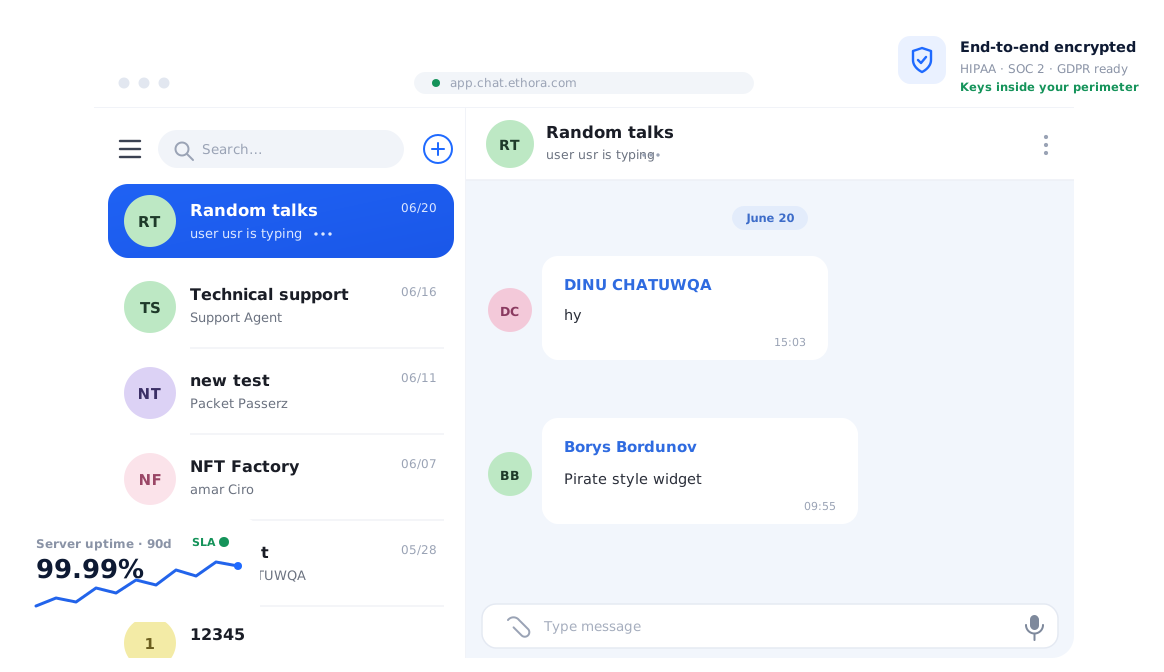
Ethora is an instant messaging platform for products rather than a consumer IM app. Its server is ejabberd, the widely deployed XMPP server, with a Node.js API layer and MongoDB in front of it, so the messaging core follows the open standard that grew out of Jabber rather than a proprietary protocol. The Chat SDK for React, React Native, iOS and Android gives you the client side: one-to-one and group rooms, channels, threads, presence, typing indicators, read receipts, server-side unread counts and push notifications.
Because the stack is open source and can run on a dedicated or self-hosted server, an organisation gets the IM experience its users expect while keeping the server, the archive and the audit trail under its own control, which is what healthcare, finance and insurance customers need. AI agents from the AI SDK join the same rooms as ordinary participants, so an IM conversation can include a bot without a separate integration.