Glossary
Agent-to-Agent Communication
The exchange of messages between autonomous AI agents so they can coordinate, delegate tasks and share information, rather than only talking to a human.
General definition
Agent-to-agent communication, often shortened to A2A, is how autonomous AI agents talk to each other to coordinate work: delegating subtasks, requesting information, negotiating and combining results. It is the backbone of multi-agent systems, where a problem is split across several specialised agents instead of one monolithic model.
- A shared message format and transport so agents can exchange structured requests and results
- Discovery, so an agent can find another with the right capability
- Roles and orchestration, so work is routed and combined
- Emerging agent-to-agent protocols, alongside the Model Context Protocol for connecting agents to tools and data
A2A differs from an agent calling a tool: tools are passive functions, while agents are active parties that can reason, hold state and start their own messages. Reliable A2A needs the same fundamentals as human chat: identity, delivery guarantees, ordering and an audit trail.
In the Ethora ecosystem
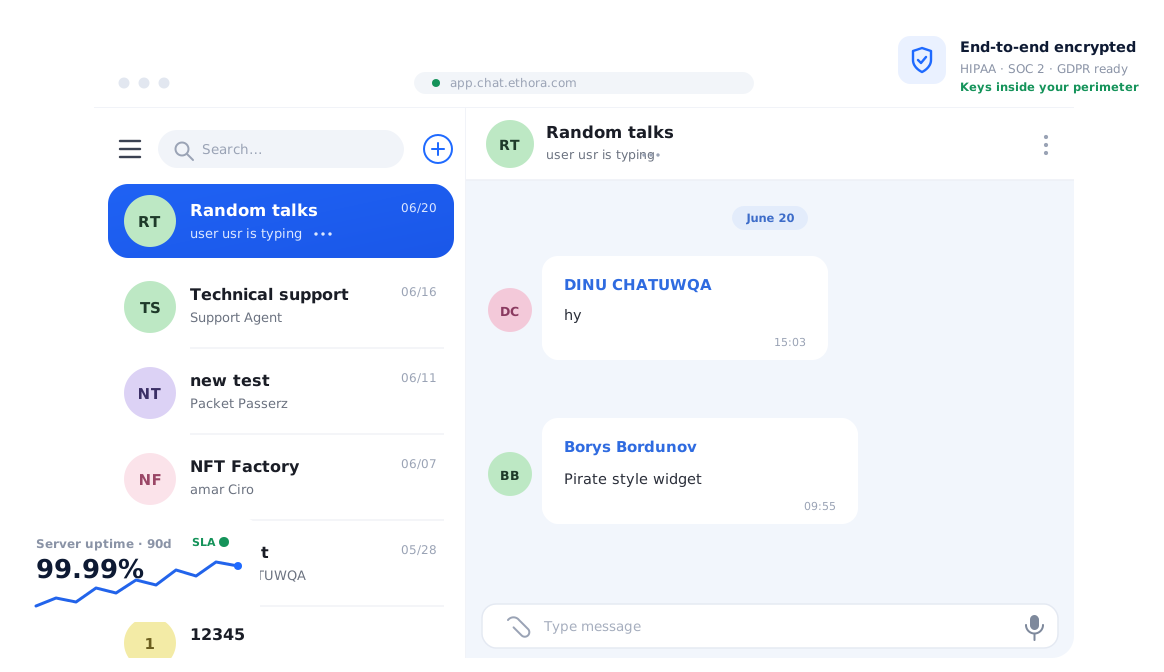
Ethora treats AI agents as first-class participants in the same real-time messaging fabric as people. An agent built with the AI SDK joins chat rooms, sends and receives messages, and can therefore talk to humans and to other agents over the same XMPP-based channel, with presence, history and delivery handled for you.
That makes Ethora a natural substrate for multi-agent and human-in-the-loop workflows, self-hosted for full data control, with an audit log of every exchange for compliance.