There are almost 15,000 apps released on the App Store and almost 10,000 on Google Play each week. In such a competitive market, engagement is a matter of survival. It’s not easy, and statistics prove it – the average 30-day retention rate for mobile apps is only 5.7%, which means 9 out of 10 users are lost within a month.
But you don’t need to invent something extraordinary to keep your customers engaged, just small targeted changes. In this blog, we’ll consider 13 app engagement strategies that actually work.
Why App Engagement Matters More Than Downloads
The number of downloads is often called a vanity metric because it shows only the initial interest in your app. It doesn’t tell if users actually use your application. So, even 1 million installs may not reflect the real value.
App engagement is the frequency and depth of meaningful interactions users have with your product after the install. It demonstrates that your app solves a real problem for your users. Engagement also affects the bottom line. For example, fully engaged retail banking customers generate 37% more revenue for their primary bank. Unlike downloads, it significantly affects retention and your solution’s overall success.
How To Measure App Engagement
Brands that maintain high engagement levels are more likely to grow market share because loyal users spend more, refer others, and stick around through pricing changes or feature updates.
Tracking the engagement will help you better understand customer needs, define where users drop off and what to improve, and make better product decisions. This is what you should pay attention to:
- DAU/MAU ratio. Daily and monthly active users. It shows how sticky your app really is
- Session length and frequency. Reveal whether users are skimming or actually using the product
- Feature adoption rate. This metric tells you if people discover the value you built
- Push notification CTR. It measures how well you re-engage lapsed users
Constantly monitor how users interact with the application, and it will help you build experiences that keep them coming back.
13 Strategies to Increase Mobile App Engagement
The 13 mobile app engagement strategies below aren’t a rigid formula – think of them as a toolkit. Test these strategies, combine them, and pick what fits your product, your users, and where you are right now.
Onboarding
74% of users drop off if they find onboarding confusing. So, don’t treat it like a form-filling exercise. Make it a guided tour to the single moment that makes the product indispensable. Cut steps. Use progress indicators. Let users learn by doing instead of reading instructions.
Duolingo’s streak-based onboarding gets new users practicing a language within 60 seconds. Headspace shows one calming exercise on first open. Both apps hit their core value before the user has time to second-guess the install.
Push notifications
Generic “Come back and use the app!” messages train users to ignore you or turn notifications off. Triggered, context-aware notifications change the game. Send a push when a user’s stock watchlist moves 5%, when their fitness goal is within reach, or when a saved cart item drops in price. Personalized push notifications can improve reaction rates by up to 400%.
Timing and relevance are the key. Test message copy, delivery time, and deep-link destination. Small tweaks here consistently lift weekly active users.
Feature discovery
Many users never explore more than two or three features, missing most of what your app can do. Use contextual in-app tooltips, coach marks, or micro-tours that appear exactly when the user is about to need the feature. You can also surface “Did you know?” prompts after users complete related actions. The result: higher feature adoption and longer session times without feeling intrusive. Remember to track feature adoption rate before and after you add discovery prompts.
Personalization
Most users (91%) prefer personalized experiences. People expect companies to understand their needs. It not only helps keep your customers engaged and happy, but also dramatically increases the performance of your app or ad campaigns. For example, tailored email campaigns have 14.32% higher open rate and almost 101% higher click-through rate.
To better understand your consumer needs, analyze their behaviour data. For financial or investment apps, this can be notifications about upcoming bills or suggestions on stocks to watch based on recent investments, for fitness apps, workouts based on recent performance, and for streaming services, suggestions of similar videos or movies.
Gamification
Leaderboards, badges, teams, rewards, limited-time challenges, and similar things make interactions with the app more fun and create a habit, which significantly increases engagement. A great example of this is the language learning app Duolingo. By implementing gamification, they increased their next-day retention from 13% in 2012 to 55% in 2019.
Implement gamification thoughtfully – it should be tied to your product’s value and reinforce it – badges for trivial tasks like checking notifications won’t work. There should be visible progress toward a meaningful goal, like saving progress in your banking app, pages left to read in a reading app, course completion percentages for educational platforms, rewards for achieving goals in fitness apps, etc.
In-app support
People want immediate feedback and a support team that understands them. Live chat, self-serve FAQ, and AI chatbots that understand context reduce frustration and churn. Place support exactly where users get stuck: after failed checkout, during complex setup, or when they linger on a screen without action. Use AI to ensure 24/7 support and free up human agents for complex matters. The ROI is direct: faster resolutions equal higher completion rates and fewer one-star reviews.
Email and social re-engagement
Sometimes users need a reminder to re-engage with your app. Segment them by last session date, features used, purchase history and send them targeted emails with deep links to where they left. “We miss you, come back,” doesn’t mean a lot to people who forget about your application. But “Your saved workout is ready”, “You were interested in…”, or other behaviour-triggered campaigns can recover 14-29% of users who would otherwise churn permanently.
Community inside the app
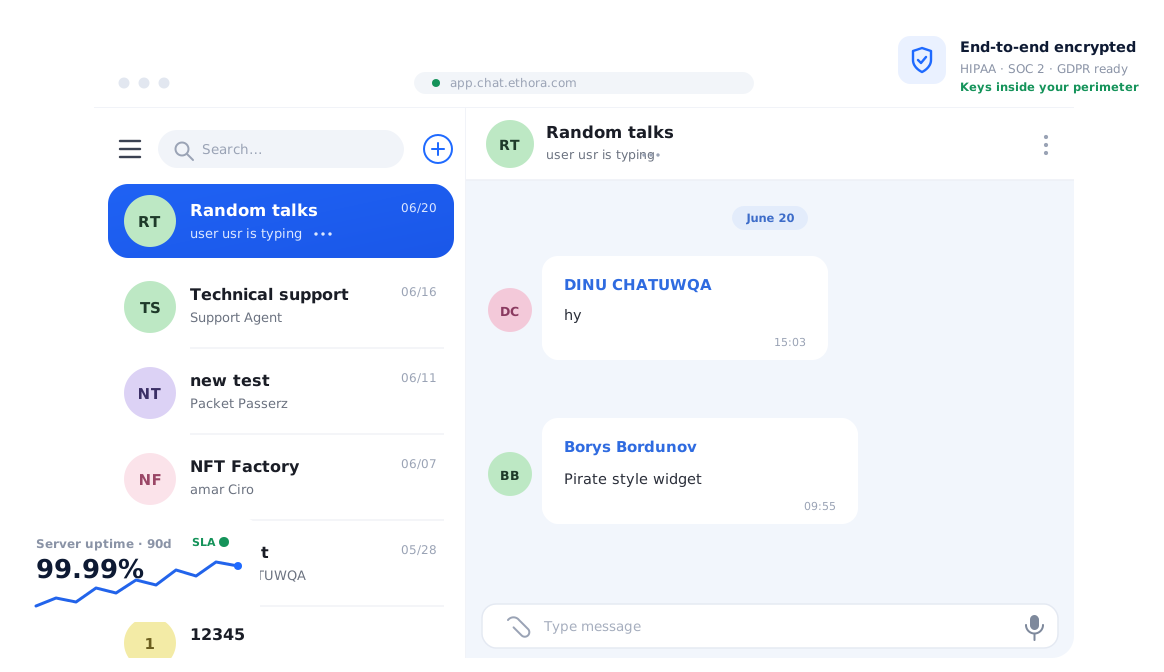
In-app chats, forums, or group features turn solitary usage into a social habit. Community features can increase engagement rates by 21%. There’s no surprise, as it gives users a reason to return, which isn’t just content consumption: they can share progress, ask questions, and celebrate milestones together. Fitness apps with group challenges and language apps with conversation rooms prove this every day.
Omnichannel marketing
Users expect the same experience, no matter if they are in the app, reading an email, or seeing a social media post. Consistent value proposition, tone, and offer across the in-app, email, SMS, and social media touchpoints can reduce cognitive load and drive habit formation. The brands that win think of every touchpoint as an extension of the app experience, rather than individual campaigns.
A clear value proposition
Mental health app Headspace uses a tagline, “Your lifelong guide to mental health,” which appears immediately, and every screen reinforces it. Users know exactly why they opened the app. Test your first screen with new users. If they can’t articulate the core value in 10 seconds, rewrite it.
Feedback loops
Collecting feedback after a specific event (such as purchasing, using a feature, or interacting with support). And then display the impact of their feedback. Using public roadmaps or ‘You Asked, We Shipped’ style release notes makes users feel like stakeholders. Flattens the retention curve because users feel heard.
Mobile-Exclusive Rewards
Provide exclusive offers or content within the mobile app. This encourages mobile-only usage and increases the number of sessions. Consider offering deals or content that is available only for a short period of time, unlockable perks to make them want to come back and get a reward, early access to features or products, etc.
A/B Testing
Big redesigns are risky. Small, frequent experiments are the way to go. Tools like Amplitude, PostHog, or Mixpanel allow you to test different variants of onboarding, notification timing, or changes to the interface with 5-10% of users and scale up the winners quickly.Teams that ship two or three validated micro-changes per month will beat teams that ship one big redesign per year.
Build Your Own: Scaling App Engagement with Ethora
The 13 strategies above require development. But they are worth the effort. If you’re a React or React Native developer or a startup CTO and don’t want to rebuild core infrastructure to implement these strategies, Ethora can help you.
Our modular Chat & AI SDK platform gives you production-ready messaging, AI agents, and community features out of the box. Your team can focus on the product experience that actually drives retention – all the heavy lifting is done. Don’t hesitate to try, it’s free.

Share with your community


More Articles
Chat SDK
Aug 28, 2026
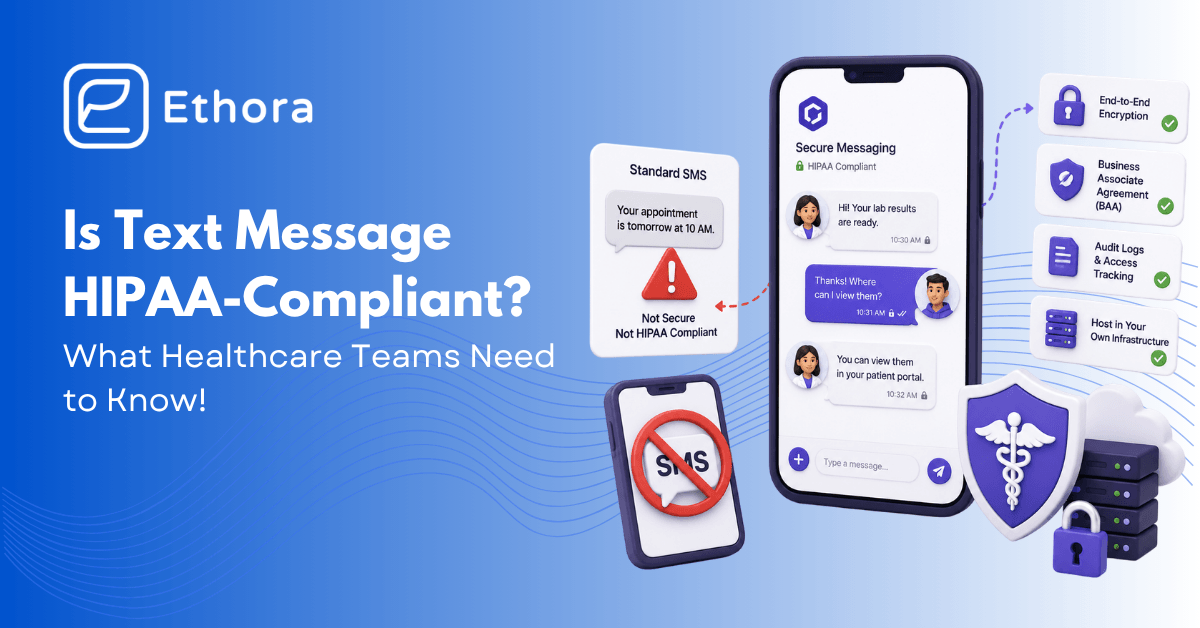
Is Text Messaging (SMS) HIPAA Compliant? What to Use Instead
Is SMS text messaging HIPAA compliant? Standard SMS is not - no encryption, no BAA, no audit trail. Here is a compliant way to message patients.

Development
Aug 24, 2026
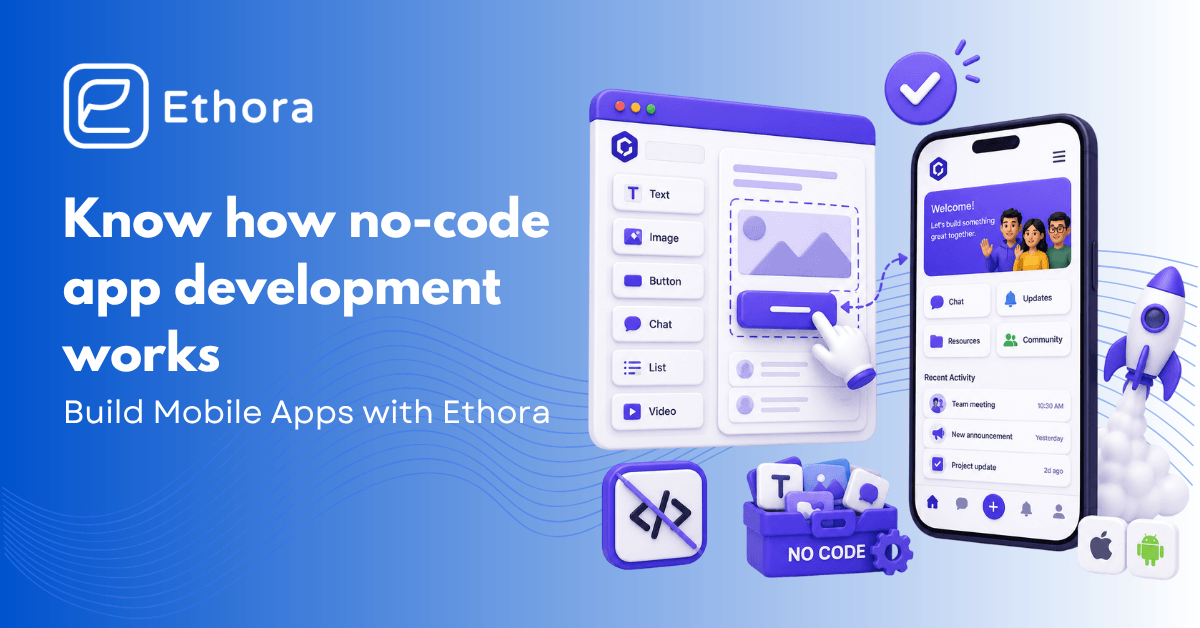
No-Code App Development: Build Mobile Apps with Ethora
Ethora enables creating feature-rich mobile apps quickly using no-code tools, empowering businesses to launch without coding expertise.

Try Out Ethora in Action
Experience Ethora's messaging with a dedicated demo from our CEO or start building your App right now!