Step by step
Get a personal connector URL
Sign in to the Ethora web app, open Account, then the AI Assistants tab, and create an API key. Copy the personal connector URL it shows. ChatGPT connectors take a URL but no headers, so the key rides in the path; keep it private and revoke it if it leaks.
https://mcp.chat.ethora.com/mcp/k/<your API key>
Turn on developer mode
In ChatGPT open Settings, select Security and login and turn on Developer mode. OpenAI notes that availability can depend on account and workspace policy; if the switch is missing, ask your workspace admin.
Create the connector
Go to the connectors page and select the plus button. Give it a name and description, choose the public endpoint option and enter the personal URL as the MCP server URL. No OAuth step is needed because the key is in the URL. Create the connection; ChatGPT loads the tool list from the server.
Name:           Ethora
Description:    Ethora chat apps, rooms, users and AI agents
MCP server URL: https://mcp.chat.ethora.com/mcp/k/<your API key>
Check search and fetch
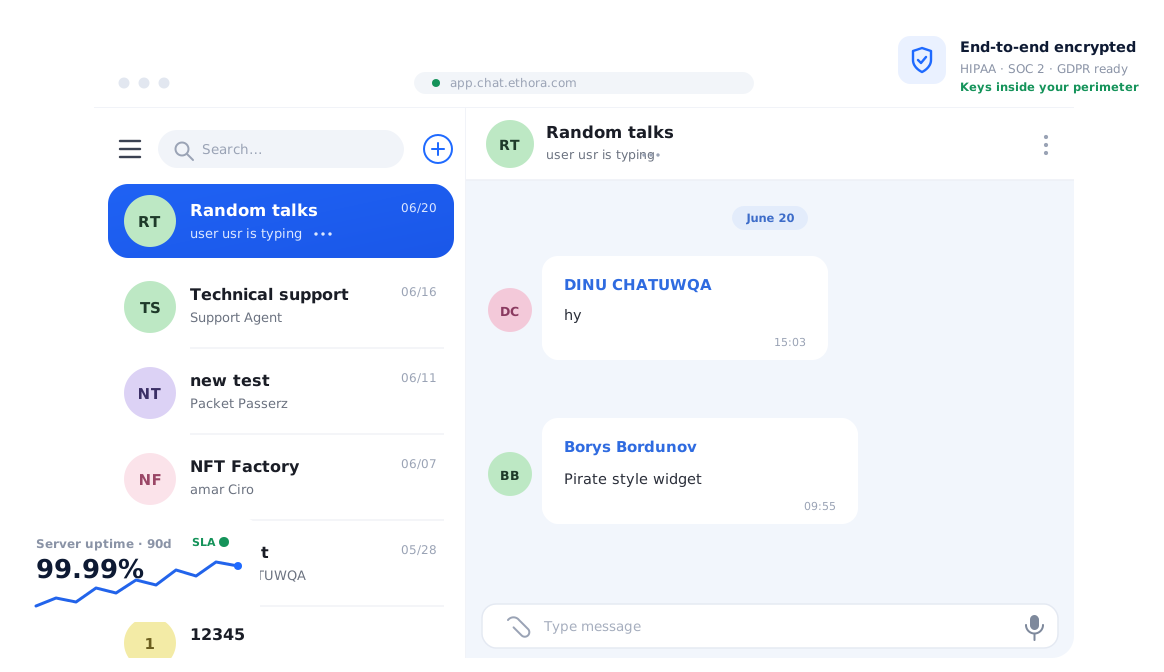
Ask a documentation question first: “Using Ethora, how do I put an agent in a room?” ChatGPT calls search, then fetch with a result id such as doc:hosted-guide, and answers from the server’s own corpus (auth map, quickstarts, recipes, one entry per tool). Both tools need no login.
Ask for the real thing
Enable the connector in the conversation and describe what you want. ChatGPT runs the tools in order, calling ethora-help when unsure. Every tool carries readOnlyHint and destructiveHint, so ChatGPT confirms the 12 destructive ones (deleting apps, rooms, files, documents, agents, revoking keys) and lets reads such as ethora-app-list run.
Remove or revoke
Delete the connector from the same connectors page when you no longer need it. To cut access from the Ethora side, ask ChatGPT to run ethora-api-key-revoke or revoke the key under Account, AI Assistants; the next request fails with REFRESH_RECORD_NOT_FOUND and the connector stops working immediately.
The tools this uses
Names and descriptions come from the server’s own tool list. Read-only tools are safe to auto-approve; destructive ones make your client ask first. Full reference.
| Tool | Name | What it does | Access |
|---|---|---|---|
| Search Docs | search | Search the Ethora documentation and tool reference: auth model (app JWT vs app token vs B2B token vs API keys), hosted-server getting started, chat-component and... | read-only |
| Fetch Doc | fetch | Fetch the full text of a documentation section or tool reference entry by the id returned from search (e.g. | read-only |
| Session Status | ethora-status | Report the current Ethora MCP session state: configured API URL, active auth mode, which credentials are present (booleans like hasAppJwt - values never echoed),... | read-only |
| Help and Next Steps | ethora-help | Task-oriented orientation for this MCP server: explains the three Ethora auth modes (user / app-token / B2B) and recommends next tool calls + recipes based on current... | read-only |
| Register Account | ethora-user-register | Create a new Ethora user account by email + first/last name, then log in and bind the session. | write |
| Log In | ethora-user-login | Authenticate as an existing Ethora user with email + password. | write |
| Create API Key | ethora-api-key-create | Mint a long-lived, revocable API key for the currently logged-in user. | write |
| Revoke API Key | ethora-api-key-revoke | Revoke one of the current user’s API keys by id. | destructive |
| List Apps | ethora-app-list | List all Ethora apps (tenants) owned by the currently logged-in user. | read-only |
| Create App | ethora-app-create | Create a new Ethora app (tenant) owned by the currently logged-in user. | write |
A worked example
“Using the Ethora connector, create an app called Book Club, add a room called Lounge, create an agent that recommends novels and invite it to the room. Then post a message asking for three mystery recommendations and show me the reply.”
search{ query: "create app and invite agent to room" }fetch{ id: "doc:hosted-guide" }ethora-app-create{ displayName: "Book Club" }ethora-app-select{ appId }ethora-app-create-chat{ title: "Lounge" }ethora-agents-create-v2{ name: "Librarian", prompt: "You recommend novels..." }ethora-agent-invite-to-chat{ agentIdOrAddress, chatJid }ethora-chats-message-v2{ text: "Three mystery recommendations?", roomJid, waitForReplySec: 45 }
An app with a room and a live recommendation agent, plus the agent reply in the ChatGPT conversation.
Good to know
- What works: all 90 tools in a developer-mode connector, including app creation, agents, RAG sources and the widget snippet. What does not: features that only use
searchandfetch, such as research over connected sources, can read the Ethora docs but do not create anything. - The URL must include the full path. For Ethora that is
/mcp/k/<key>, not the bare host. - Each conversation gets its own MCP session; the selected app does not carry over, so name it again or let ChatGPT run
ethora-app-list. - A listed connector would use the OAuth endpoint
https://mcp.chat.ethora.com/mcp/oauthwith ChatGPT running the login instead of a pasted key.