Healthcare
Digital Healthcare with AI, LLM and Messaging in 2026

Generative artificial intelligence is already reshaping many industries, from customer support to finance. For the last few years, LLM models moved from a useful add-on to a part of the infrastructure, with many businesses implementing them as a part of their strategy.
AI in healthcare is booming, and 75% of leading companies implement or experiment with generative AI. In this blog, we’ll consider how this technology will continue changing digital health in 2026.
Current Trends and Transformation
The advancements of technology and constantly rising patient expectations drive the digital healthcare transformation. The main trends are artificial intelligence and LLMs, secure data exchange and messaging, telehealth and virtual care, and interoperability. These trends prove that AI is not just an auxiliary tool, but a native layer of the healthcare infrastructure that improves both provider efficiency and patient outcomes.
The healthcare sector is moving away from isolated digital tools toward fully integrated, intelligent ecosystems. When we analyze digital healthcare trends, it becomes clear that 2026 is the year of “Machine-Scale Support.” Hospitals are no longer just experimenting with pilots. They are embedding AI into the very fabric of clinical workflows to combat chronic staffing shortages and rising operational costs.
AI-Driven Patient Engagement and LLM Roles
AI patient engagement means the use of artificial intelligence (AI) to personalize and improve patient interactions. It’s automated intelligent systems that maintain dialogue with patients throughout their medical journey. No waiting for follow-up calls, just real-time guidance, appointment reminders, and education tailored specifically to their condition.
As we see, the role of LLM in medicine has expanded from simple text generation to more sophisticated tasks, such as translating medical jargon into easy-to-understand language and drafting clinical summaries for doctors.
LLM Integration in Clinical Workflows
Medical LLMs are used in healthcare to streamline tasks like documentation, coding, and patient education, reducing physician burden and improving efficiency by automating data extraction and generating summaries. Even though concerns such as bias or need for human supervision remain, 95% or executives believe it’s a positive force in their workplace.
Modern EHR systems use LLM to automatically summarize a patient’s multi-year history into a concise pre-visit brief. This allows a physician to enter a room fully informed, focusing their limited time on care rather than scrolling through digital folders.
Future of AI Diagnostics
Diagnostics is a sphere that can benefit a lot from the impact of AI on healthcare. AI can analyze vast amounts of data, as well as identify patterns and anomalies the human eye can’t see. This enables more accurate diagnostics and early detection of sickness. For example, an experiment in China showed that AI can track brain activity unnoticeable for doctors and its results were 90% correct.
The future of AI in medical diagnostics is multi-modal systems, able to correlate data with various factors, such as genetic data, lab results, and even environmental factors. They identify “warning signs” of diseases like cancer or heart failure months before the first physical symptoms.
Generative AI Applications
To grasp the full scope, we should understand how generative AI for healthcare works in a day-to-day setting. It goes beyond smart assistants; the main applications are:
- AI scribes & documentation. These tools reduce documentation time by transcribing patient visits in real-time.
- Patient monitoring and predictive analytics. AI models scan Electronic Health Records (EHRs) to predict risks like sepsis, cardiac arrest, or hospital readmission hours before symptoms become obvious to a human.
- Treatment planning. AI can suggest highly personalized post-operative care plans, adjusting recovery to the specific case, recovery speed, and lifestyle.
- Drug discovery. Generative models can simulate “synthetic patient data” for research to enable faster drug discovery.
- Precision medicine. Mapping patients’ genetic profiles against vast databases enables the most effective targeted therapies, particularly in oncology and cardiology.
- Mental health support. Chatbots trained on Cognitive Behavioral Therapy (CBT) and Acceptance and Commitment Therapy (ACT) frameworks can support users, help them reframe negative thoughts, monitor behavioral data and mood patterns, predict potential crises, and nudge them toward professional help before it occurs. This is especially important in underserved areas or for 24/7 support.
- Symptom checking. The system asks questions based on real-time responses. This AI-driven patient interaction works to route the patient to the right specialist or a correct level of care – hospital or home care recommendation.
- Cybersecurity. Healthcare professionals deal with a lot of sensitive information, and keeping it safe is paramount. Implementing AI into IT infrastructure allows proactive threat detection, reducing the risk of leaks.
80% of hospitals now use AI for better patient care and more effective workflows. In less than ten years (by 2035), GenAI in the healthcare market is expected to reach $39.8 billion (compared to $3.3 billion in 2025). AI helps clinicians not only be more effective, but also return to the human-centric aspects of their work.
Secure Healthcare Messaging
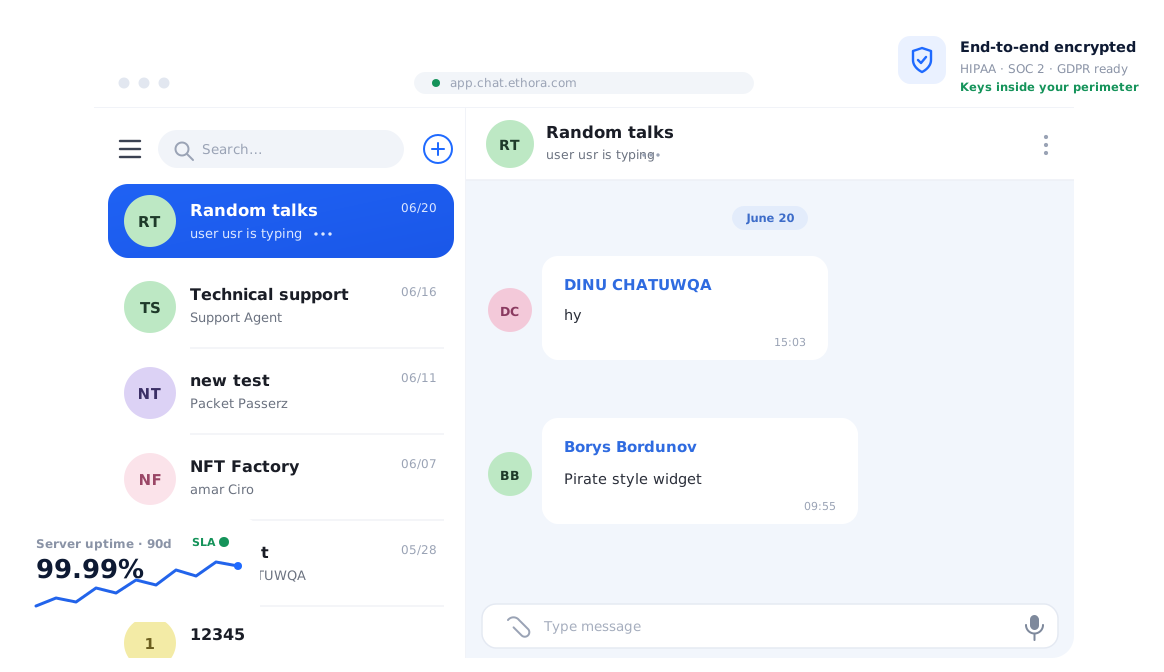
Patients and doctors share a lot of sensitive information, which makes secure messaging one of the most important things in healthcare. With integrations of AI and automations, this becomes even more critical, as both the volume and complexity of data being processed and exchanged increase.
HIPAA-compliant and secure messaging platforms go far beyond simple passwords, protecting data with:
- End-to-end encryption. This ensures data is encrypted when stored and in transition, making it unreadable for anyone but the service provider.
- Role-based access. This limits access to the data, allowing it to be viewed only by authorized users, directly involved in the patient’s care.
- Audit trails. Maintaining immutable logs makes it possible to see who and when viewed the data. This is mandatory to stay compliant with regulations and promotes transparency and accountability.
Privacy is the foundation of patient-provider relationships. Using secure channels with security measures in place reduces the risks of data breaches.
Conclusion
With the development of technology, healthcare changes just as any other industry. Implementing AI becomes not just a competitive advantage but a necessity that allows providers to keep up with the competition, providing patients with top-notch experiences.
In the 2026 digital health landscape, LLMs will play a big role, automating a lot of process, improving care and diagnostics. Their life-saving precision makes them an essential pillar of modern healthcare. Combining their possibilities with secure messaging and interoperability enables a more proactive, personalized, and accessible experience for everyone.
Ethora offers a secure messaging tailored specifically for healthcare providers that you can build without extra effort or costs. Just a simple tool that allows you to create personalized, AI-powered real-time communication, customized to your specific needs and vision. Try it for free.

Share with your community


More Articles
Chat SDK
Aug 28, 2026
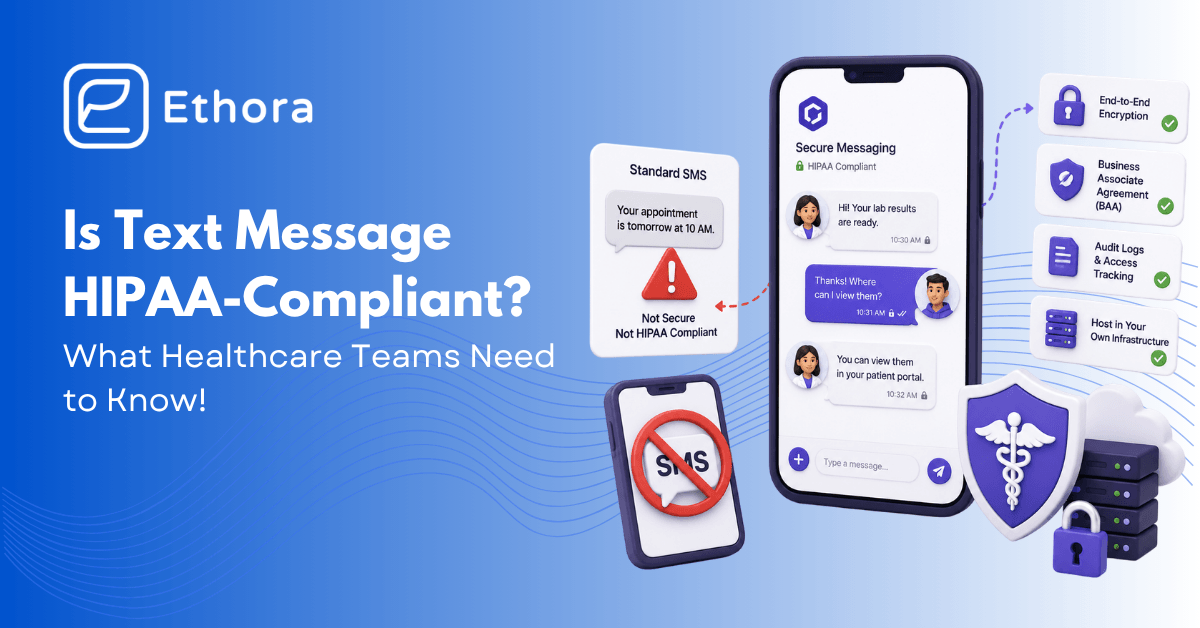
Is Text Messaging (SMS) HIPAA Compliant? What to Use Instead
Is SMS text messaging HIPAA compliant? Standard SMS is not - no encryption, no BAA, no audit trail. Here is a compliant way to message patients.

Development
Aug 24, 2026
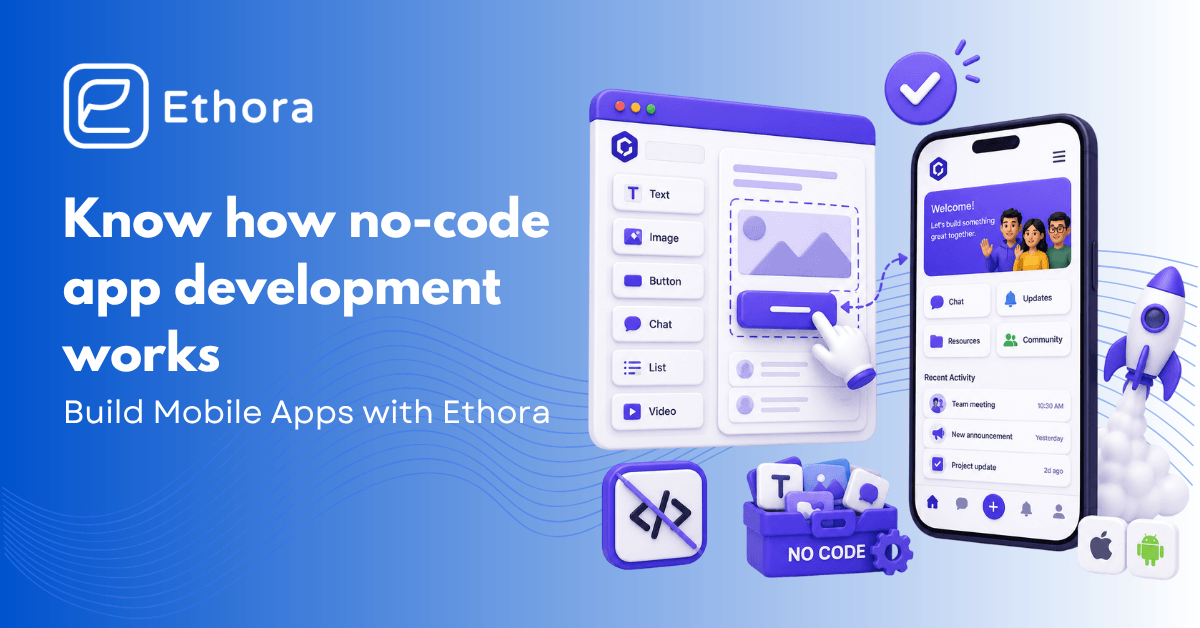
No-Code App Development: Build Mobile Apps with Ethora
Ethora enables creating feature-rich mobile apps quickly using no-code tools, empowering businesses to launch without coding expertise.
Try Out Ethora in Action
Experience Ethora's messaging with a dedicated demo from our CEO or start building your App right now!